Key Takeaways
•The direct answer: If walkability matters most, target the Green Line D-branch villages — Newton Centre, Newton Highlands, Waban, and Chestnut Hill. They deliver true walk-to-the-T, walk-to-dinner living.
•The trade-off: That single-family lifestyle costs meaningfully more than Pike-adjacent villages like West Newton and Newtonville. The village medians below show the full spread across Newton.
•The honest middle path: If you cannot stretch to a top-village single-family budget, condos and townhomes inside those same village centers start at a citywide median well below single-family pricing. You get most of the walkable lifestyle in a smaller footprint — but you give up the yard and single-family privacy.
•The bottom line: Do not pay Green Line prices for a Pike-village lifestyle, or vice versa. Pick the Newton you will actually live in.
# Where Should You Buy in Newton if Walkability Matters Most?
Everyone calls Newton walkable.
Technically, that is true. The city carries a 77 walking score overall.
But here is what buyers often discover too late: walkability in Newton is not evenly distributed across the city.
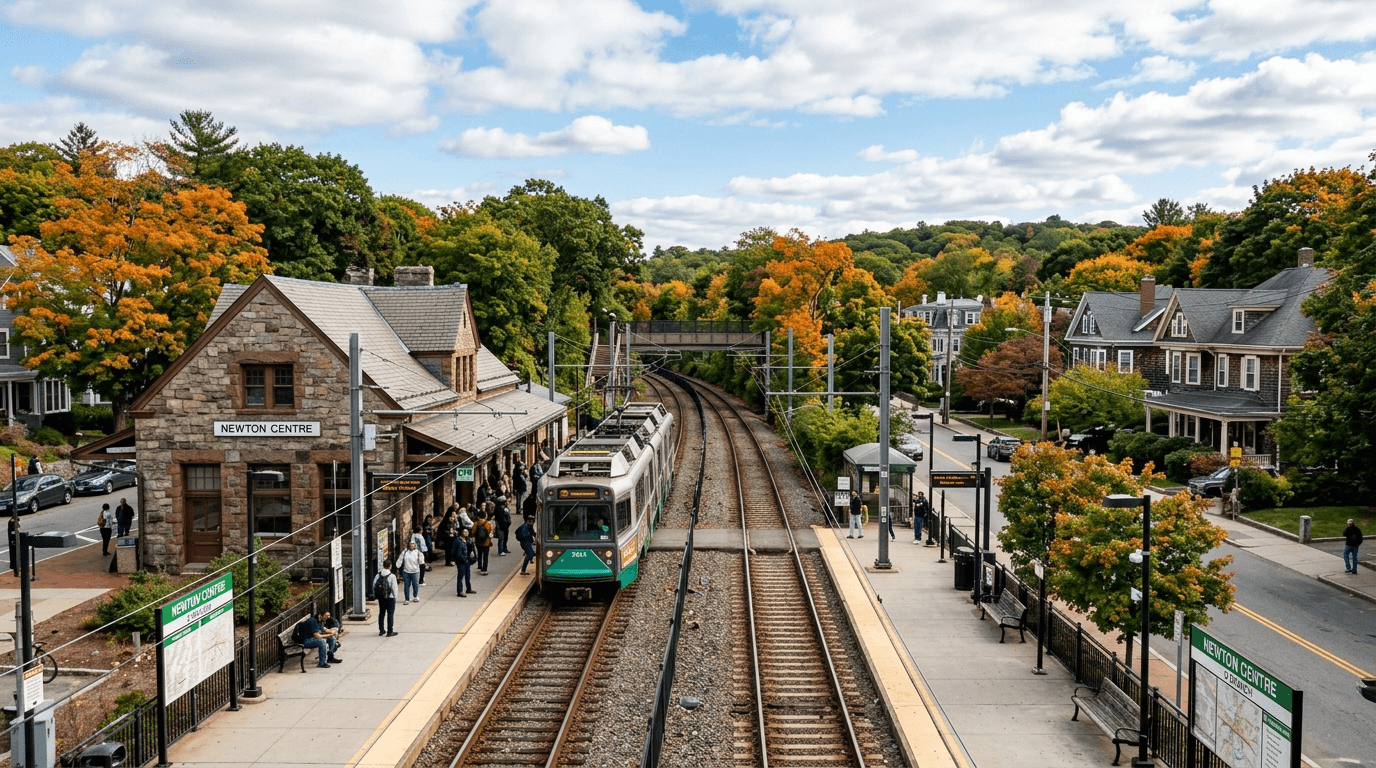
The most walkable neighborhoods are concentrated in four Green Line D-branch villages — Newton Centre, Newton Highlands, Waban, and Chestnut Hill. These are where the walk-to-the-T, walk-to-dinner lifestyle is most fully realized.
The rest of the city follows a different pattern. One Newton is the Green Line lifestyle: walk to the T, coffee, dinner, shops, and daily errands without touching your car keys. The other is the Mass Pike commute lifestyle: faster by car, often more house for the money, but built around driving.
Choose the wrong one, and you could spend well over $2 million on a home that still requires a car for most of daily life. The village price table below shows the median breakdown across the top Green Line villages.
The split comes down to infrastructure. The MBTA Green Line D Branch — the Riverside Line — runs through several southern Newton villages. Interstate 90, the Mass Pike, cuts through the northern side. That single difference creates two distinct lifestyles and two distinct price levels.
The worst outcome is paying Green Line prices for a Pike-village lifestyle — or buying Pike convenience while assuming you will walk everywhere.
Why Is Walkability the Premium in Newton Right Now?
Coming out of the spring market, one thing stands out:
Well-located Newton homes are still moving.
Citywide, single-family homes are selling in a median of 22 days from listing to sale, per MLSPIN June 2026 data. Citywide inventory sits at 8.6 months of supply — meaning at the current sales pace, it would take 8.6 months to sell every single-family home currently on the market. That is a balanced-to-buyer number at the citywide level.
The citywide figure, though, obscures what is happening village by village. The fastest-moving villages heading into summer are Newton Centre, Newton Highlands, Waban, and Chestnut Hill. Listings in those village cores remain limited, and well-priced homes still draw real competition.
They all share the same core advantage: walkability plus Green Line access.
That matters for your daily life. It also matters for resale.
Transit proximity in Newton is not a simple pricing formula — a home does not rise by a fixed dollar amount just because it sits near a T stop. But Green Line access adds convenience, daily flexibility, and a consistent pool of buyers who specifically want car-light living. That demand is what sustains pricing in the village cores even as citywide inventory loosens.
What Does the Green Line Lifestyle Actually Buy You?
The Green Line D-branch villages are where "walkable Newton" feels most complete.
That means:
•You can walk to coffee.
•You can walk to dinner.
•You can walk to the T.
•Your teenager can get to Fenway without needing a ride.
•You may be able to live with one fewer car.
This is the lifestyle most buyers picture when they search for walkable neighborhoods in Newton MA. And the market prices it accordingly.
Median Sale Price by Newton Village
A village-level comparison of reported 2025 median sale prices across Newton neighborhoods.
| Series | Label | Value |
|---|---|---|
| Median sale price | Chestnut Hill | $2,800,000+ |
| Median sale price | Newton Centre | $2,425,000 |
| Median sale price | Waban | $2,350,000 |
| Median sale price | Newton Highlands | $1,895,000 |
| Median sale price | Oak Hill / South Side | $1,825,000 |
| Median sale price | Newtonville | $1,780,000 |
| Median sale price | West Newton | $1,675,000 |
| Median sale price | Auburndale | $1,550,000 |
| Median sale price | Newton Corner | $1,375,000 |
| Median sale price | Nonantum | $1,150,000 |
Pros of the Green Line villages:
•Real village centers with cafés, restaurants, and shops
•MBTA D Line service toward Fenway, Back Bay, and downtown
•Strong school assignment zones
•Better resale flexibility because walkable homes are genuinely scarce
•Less daily dependence on a car
Cons of the Green Line villages:
•Some of the highest prices per square foot in Newton
•Strong competition for Newton Centre homes and Newton Highlands real estate
•Smaller lots near the village core
•Driving to Boston can be faster than the Green Line when traffic is light
On that last point: the Green Line premium is not really about raw speed to downtown. It is about frequency, no parking costs, no traffic stress, and independence — your teen can get to Fenway alone, you can have a glass of wine at dinner, and you can skip a $40 parking garage. If a fast solo drive to a downtown garage is what you actually need most days, a Pike-adjacent village may serve you better.
Best for: Long-term homeowners who prioritize daily quality of life, families with teens who want more independence, and buyers thinking 10-plus years ahead about resale.
What Should You Know About the Mass Pike Commute Villages?
Newton Corner, West Newton, and Newtonville sit closer to the Mass Pike.
The honest answer? They are more convenient by car, generally more affordable to enter, and — in the case of West Newton and Newtonville — they do have real village centers with shops, restaurants, and daily walkable errands.
But the daily rhythm is different. The Newtonville commute option is commuter rail, not the higher-frequency Green Line. Commuter rail runs on a schedule, often hourly off-peak, which means you plan your day around the train. The Green Line runs frequently enough that you can simply show up and go. That is the real walkability gap: not whether a village center exists, but whether transit is casual or scheduled.
Pros of the Pike-adjacent villages:
•Lower entry prices
•Fast car access to downtown Boston via the Mass Pike
•West Newton and Newtonville have restaurants and active village squares
•Newtonville commuter rail offers car-free trips to South Station
Cons of the Pike-adjacent villages:
•Pike noise and air-quality concerns near the highway
•Some walks involve wide roads, parking lots, or heavier traffic
•Less of the seamless village-center feel
•Commuter rail runs less frequently than the Green Line
Best for: Buyers whose top priority is a shorter drive to a Boston office. These villages can also be strong choices if you want Newton schools at a lower entry price, or if driving for most errands does not bother you.
How Do Newton Villages Compare on Price?
Here is the side-by-side, using village-level single-family medians:
Newton Village Median Sale Price and Lifestyle Anchor Comparison
Compares 2025 reported median single-family sale prices and primary transportation lifestyle anchors across seven Newton villages.
| Category | Median Sale Price | Lifestyle Anchor |
|---|---|---|
| Chestnut Hill | $2,800,000+ | Green Line |
| Newton Centre | $2,425,000 | Green Line |
| Waban | $2,350,000 | Green Line |
| Newton Highlands | $1,895,000 | Green Line |
| Newtonville | $1,780,000 | Pike + Commuter Rail |
| West Newton | $1,675,000 | Pike + Commuter Rail |
| Newton Corner | $1,375,000 | Pike (car-first) |
The gap is real. The table above shows the spread between Pike-adjacent villages — West Newton, Newtonville, and Newton Corner at the lower end — and the Green Line villages — Newton Highlands, Waban, Newton Centre, and Chestnut Hill — at the higher end.
The premium depends on which villages you compare. Newton Highlands sits closest to the Pike-adjacent villages in price. Waban and Newton Centre sit meaningfully above them. Chestnut Hill is the high outlier and stretches the top of the range considerably further.
So the realistic "Green Line premium" for a comparable single-family home depends entirely on which Green Line village you target. Newton Highlands narrows the gap; Chestnut Hill widens it considerably.
That is the real decision. You are choosing whether the daily walk-to-the-T lifestyle is worth the premium. For some buyers, it absolutely is. For others, that money is better deployed toward more space, a larger lot, or a shorter drive.
What Are the Strongest Arguments Against This Green Line vs. Pike Framing?
This comparison is useful, but it can sound too clean if we do not address the pushback.
Newton is not a one-size-fits-all city. Village feel changes block by block. So here is the honest version.
What if West Newton and Newtonville are also walkable?
Fair point. Both have real village centers, restaurants, shops, and useful daily stops. Newtonville also has commuter rail into South Station.
Walkability-focused buyers have more than two choices. The distinction is not "walkable vs. not walkable" — it is frequency and feel. Green Line villages put high-frequency transit, a village core, and residential streets within a tight, low-traffic walking radius. Pike-adjacent village centers are real, but they sit closer to highway noise and wider roads, and their rail option runs on a schedule rather than a frequency.
If that distinction does not matter to you, a Pike village can be the smarter buy. Be honest with yourself before paying the Green Line premium.
What this means for you: Do not judge walkability from a map alone. Walk the village at 7 p.m. on a Tuesday. Try the route from the home to dinner, coffee, the train, and the grocery stop you would actually use.
What if the market is softening and buyers should wait?
Village-level data shows pricing in the most walkable villages remains elevated even as citywide conditions normalize following the 2024 run-up.
A normalizing citywide market does not mean walkable village inventory is suddenly plentiful. Listings inside the village cores remain limited. For a walkability-first buyer, waiting often means fewer choices, not lower prices — especially if you need a specific school assignment or proximity to a particular T stop.
That said, this is a real risk to weigh. If the market softens further, premium pricing in any city tends to give back ground first. The honest answer: buy the village you will live in for 10-plus years, not as a short-term play.
What if a top-village single-family budget is not realistic?
That is a valid concern. The village medians in the table above place Waban, Newton Centre, and Chestnut Hill at the top of Newton's single-family range — and for most buyers, that is not the budget.
There is another path.
Median Sold Price by Property Type in Newton
A simple price comparison using MLS-derived median sold prices for the last 180 days.
| Series | Label | Value |
|---|---|---|
| Median sold price | Single-family | 1860000 |
| Median sold price | Mixed | 1177500 |
| Median sold price | Condo | 790000 |
Source:Repliers / MLSPIN
Newton's condo segment, which clusters heavily near village centers, carries a citywide median sold price of $790,000. Mixed property types — attached townhomes and two-family-style homes — have a median of $1,177,500. The citywide single-family median in that same block is $1,860,000; the higher village-level figures in the earlier table reflect specific Green Line villages, not a contradiction.
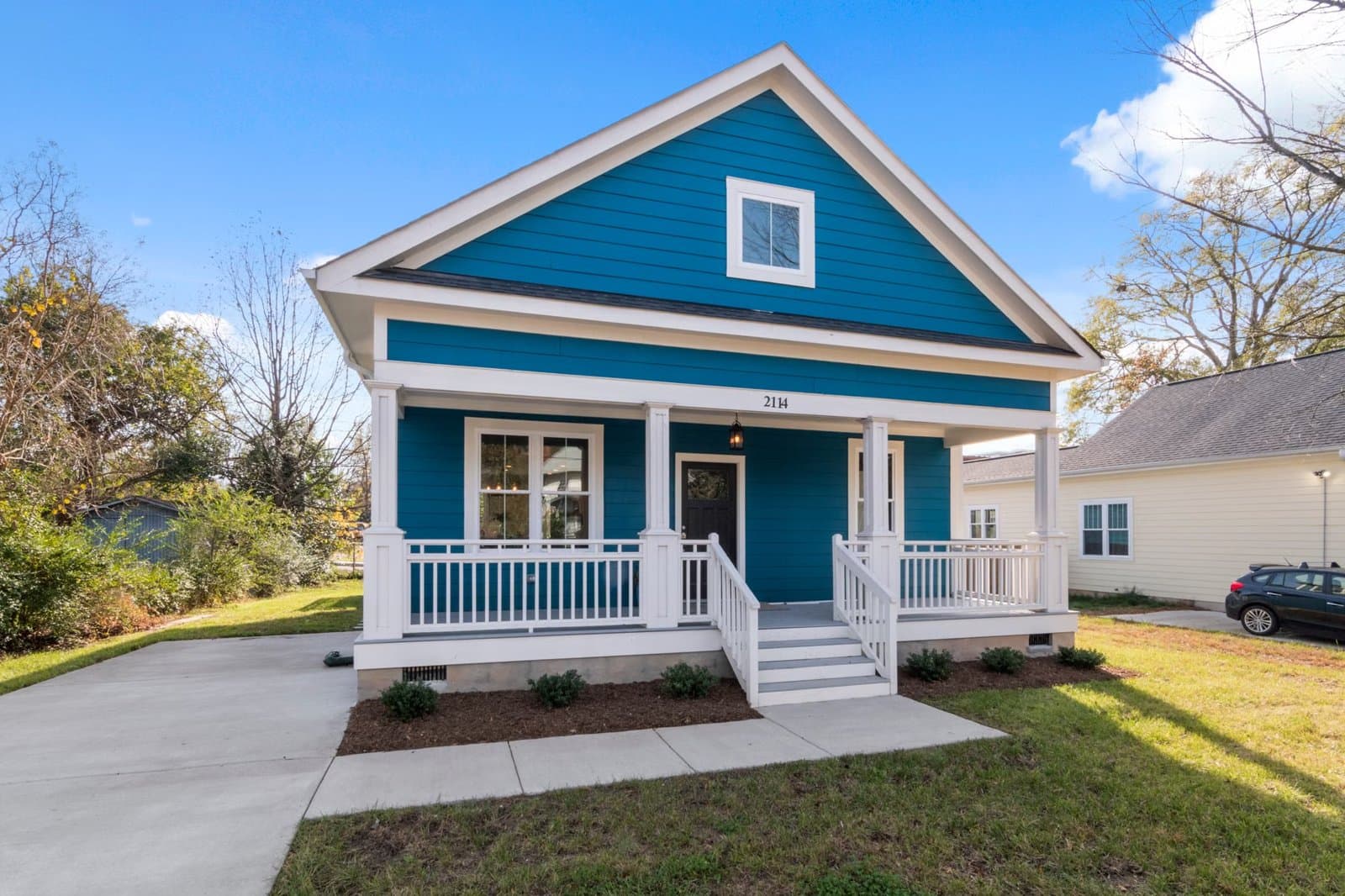
Here is the honest trade-off: a condo near a Green Line village center delivers most of the walkable lifestyle — the coffee, the train, the dinner on foot. What it does not deliver is the single-family experience: the yard, the privacy, the garage, the space for a growing family. If walkability is the primary goal, a condo is a strong answer. If you also want a single-family home, the Green Line single-family premium is what that combination costs.
The choice clarifies itself: walkability alone is available at the $790K condo median. A single-family home with walkability is what costs more, per the village table above. Decide which of those two things you are actually buying.
Which Newton Should You Actually Buy?
If walkability truly matters most and you want a single-family home, start with the Green Line D-branch villages: Newton Centre, Newton Highlands, Waban, and Chestnut Hill.
They deliver the strongest version of daily walkable single-family living in Newton.
Based on the village medians in the table above, you will pay a meaningful premium over a Pike-adjacent village — and more still if you compare to Newton Corner at the low end or push into Chestnut Hill at the high end.
What that premium actually buys:
•High-frequency transit, not scheduled rail
•A walkable village core within a quiet residential radius
•Less car dependence for daily errands
•More independence for teens
•A village-center setting that cannot be replicated or expanded
The Pike villages win when your real priority is commute time, value, and access to Newton schools at a lower price. West Newton, Newtonville, and Newton Corner can be smart buys for the right buyer — specifically, one whose daily life is built around driving and a fast Pike trip to downtown.
Be clear about what you are choosing. If you want to walk to everything, do not buy convenience and assume the walkability will follow.
One more long-term point: you cannot build more village centers next to a T stop. That constraint is part of why Green Line single-family pricing has held up through earlier cycles. The current normalizing market is a real factor, but the underlying scarcity of walkable, transit-adjacent housing is structural.
Pick the Newton you will actually live in.
If that means sidewalks, dinner on foot, and the D Line, stretch for the right Green Line village if your budget allows. If a condo near the village center is what fits, that is a legitimate path to the same lifestyle. If it means a faster drive, more space, and a better price, the Pike villages offer real value.
Just do not pay for one lifestyle while living the other.
If you want help narrowing this down, ask for a village-by-village shortlist built around your budget, your commute, your school needs, and how much walking you actually want in daily life.