Key Takeaways
•The choice you didn't know you had: Instead of selling and fighting for a scarce home this fall, Somerville's draft dormer rules could let you build the bedroom you need into your own attic.
•The market reality: In a tight market, "buying up" means winning an expensive, hard-to-find property — while the space you need may already be upstairs.
•The bottom line: If you love your block and mainly need bedrooms, expanding may beat moving up once the draft rules are finalized and you have real local bids — so confirm both with the city first.
Could Your Next Bedroom Already Be Upstairs?
If your family is outgrowing your Somerville home, the obvious answer may feel like: sell, then buy bigger. But in September 2026, that is a tough path. Inventory is thin, good homes move fast, and families who need one more bedroom often compete for the same few options.
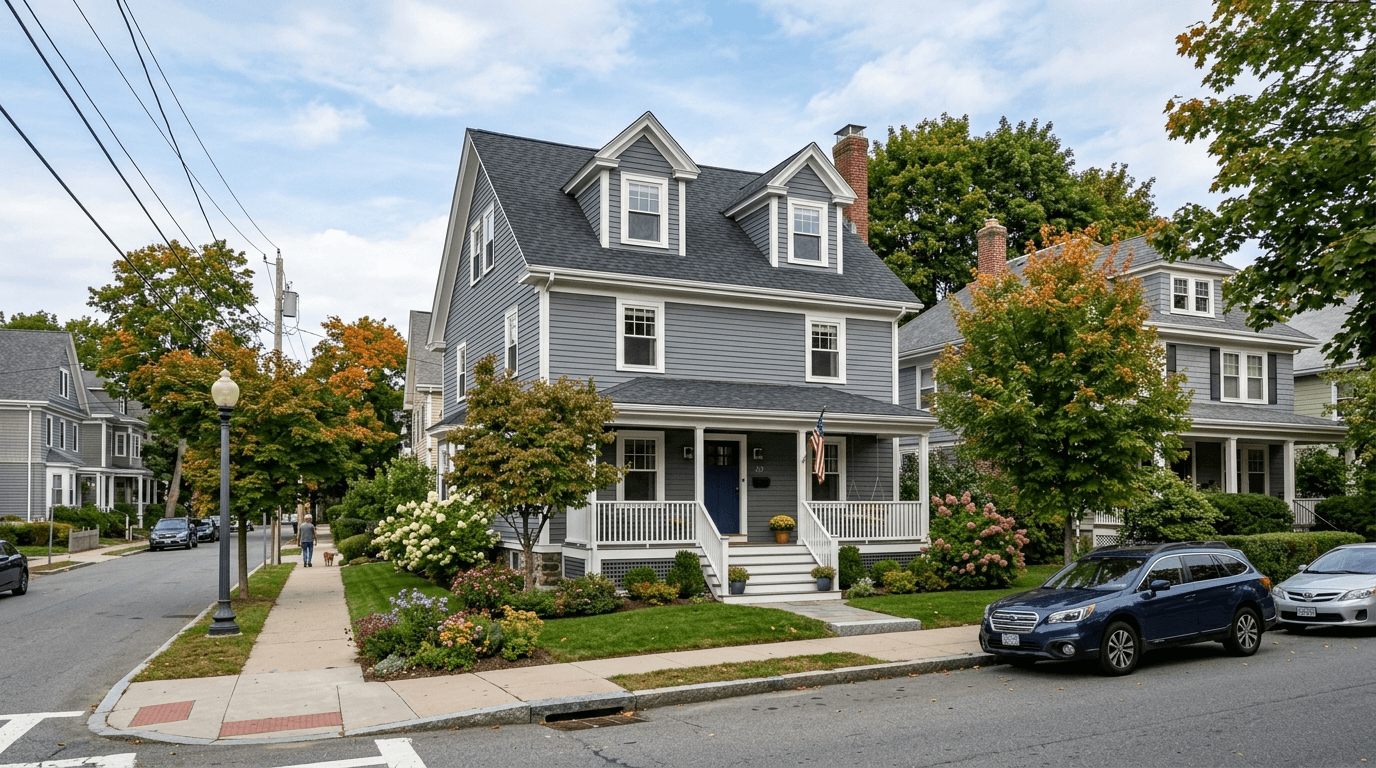
There may be another choice. Somerville’s zoning review includes draft changes to dormer standards. A dormer is the windowed structure that projects from a sloped roof — it can turn tight attic space into a usable room.
If the space you need is mostly bedroom space, expanding may beat moving.
Is Buying a Bigger Somerville Home Really Worth It?
Buying up has one clear advantage: the space is already done. No construction, no permits, no waiting on contractors. That convenience is worth something.
But the trade-offs are big. In a tight market you are not just shopping — you are competing. You may need to stretch your offer or waive protections — like the home-inspection condition that lets you back out if problems turn up. Then come broker commissions, moving costs, and the emotional cost of leaving a block you already love — the neighbors your kids know, the commute that works, the routines built around where you live now.
How Could the Draft Dormer Rules Change the Math?
A dormer can make sloped attic space feel like real living space. For some homes, the missing bedroom may already be inside.
Per Somerville’s draft dormer standards, each dormer would keep a 15% minimum window-space requirement. A dormer must sit at least 2 feet in from the roof edge of a front gable — the "setback," or distance from that edge. Where a dormer interrupts an existing eave — the roof's lower edge — it needs 2 feet or more of finished-floor clearance. The roof slope must be at least 2:12 (9.46°), and flat dormer roofs would not be allowed.
Draft Revised Gable and Shed Dormer Standards
Numeric and rule-based draft standards for gable and shed dormers from Somerville’s 5-year zoning review page.
| Category | Fenestration | Setback | Eave Interruption | Roof Form |
|---|---|---|---|---|
| Window space minimum per dormer | 15% | - | - | - |
| Required setback for side-facing dormers from roof edge of a front gable | - | two (2) feet | - | - |
| Condition for dormers interrupting existing eave (finished floor clearance) | - | - | two (2) or more feet | - |
| Minimum dormer roof slope (ratio) | - | - | - | 2:12 |
| Minimum dormer roof slope (degrees) | - | - | - | 9.46° |
| Prohibition of flat dormer roofs | - | - | - | Flat roofs are prohibited |
Clearer rules can mean fewer surprises at permit time. In Somerville's draft permissions table, "P" means allowed and "N" means not allowed. Multi-Plex buildings are marked P for gable, shed, and cross-gable dormers, while Apartment Buildings are marked N for gable and shed dormers. So your building type can decide whether a dormer path is even available.
Dormer Permissions by Somerville Building Type
Permitted and not-permitted status for dormer and gable components across UR building types under Somerville zoning Table 3.2.12.
| Category | Gable Dormer | Shed Dormer | Cross Gable |
|---|---|---|---|
| Semi-Detached Triple Decker | N | N | N |
| Multi-Plex | P | P | P |
| Apartment House | P | P | P |
| Apartment Building | N | N | N |
| Row houses | P | N | N |
Massachusetts has also recently expanded accessory-dwelling-unit allowances statewide — confirm the current rules with your agent or the city. But cost still matters. As the National Association of Home Builders notes, “structural changes or system upgrades require more time, specialized labor, and regulatory approval.” A dormer can be smart, but it is not automatically cheap.
What Are the Strongest Reasons Not to Expand?
“The rules are still a draft.” That is fair. The smart move is not to guess: pre-scope the project now, then confirm the final adoption date and permit path with Somerville planning staff before spending serious money.
“A dormer may only add one bedroom.” Also fair. If you need a very different layout, a larger yard, parking, or a new neighborhood, moving may still be the better answer. But if the main problem is one more bedroom, a dormer targets that exact need — while buying bigger means trying to win a scarce, expensive property.
What Should Somerville Move-Up Families Do Next?
If you love your block and mainly need bedrooms, the draft dormer path deserves a serious look. Choose expanding when your attic has usable space, the structure can support the work, and the cost beats the move-up price. Choose moving when your current home cannot support your next stage of life.
First, ask Somerville planning staff to confirm the current dormer standards and permit path. Then price a dormer conversion against an actual home you would buy.
Sometimes the smartest move is no move at all — build the bedroom, keep the neighbors.