Key Takeaways
•The bottom line: If a one-seat train ride downtown is your daily must-have, stay on the Green Line D-branch and pay for it. If space and historic charm rank higher, Upper Falls may hand you more house — with its own trade-off in historic-review rules.
•The transit question is real: Being off the direct D-branch can be a lasting drag on resale, since transit-adjacent villages tend to hold value well. Weigh that against the space you gain.
•Know the limit of this comparison: The transit trade-off mostly matters if you commute downtown by rail. If you don't, the "penalty" may barely touch your daily life.
Is the Green Line really the dealbreaker?
The standard advice for Newton move-up buyers is simple: stay near the Green Line D-branch if you can. That makes sense if you commute downtown daily — a one-seat train ride into Boston is valuable.
But Upper Falls gets dismissed too quickly because it sits off that direct line. For the right buyer, that "penalty" may be where the opportunity is.
Here's the honest counterpoint: transit-adjacent villages often hold value better over time, so the space you save today could cost you on resale later. That's a real risk. It's why the commute question deserves a clear-eyed test, not a quick dismissal.
What do you gain by choosing Upper Falls?
The biggest gain is buying power: villages off the direct line generally cost less per square foot, which can mean more bedrooms, more yard, or more flexible space.
Newton's schools are a citywide draw. Math proficiency is 71% versus 43% statewide. Reading is 68% versus 45% statewide. These figures apply across Newton, so they don't favor Upper Falls over a D-branch village.
Newton Public Schools Proficiency vs Massachusetts Average
A grouped bar chart comparing Newton Public Schools math and reading proficiency with Massachusetts averages.
Math proficiency
Reading proficiency
| Series | Label | Value |
|---|---|---|
| Math proficiency | NPS | 71% |
| Math proficiency | Massachusetts average | 43% |
| Reading proficiency | NPS | 68% |
| Reading proficiency | Massachusetts statewide average | 45% |
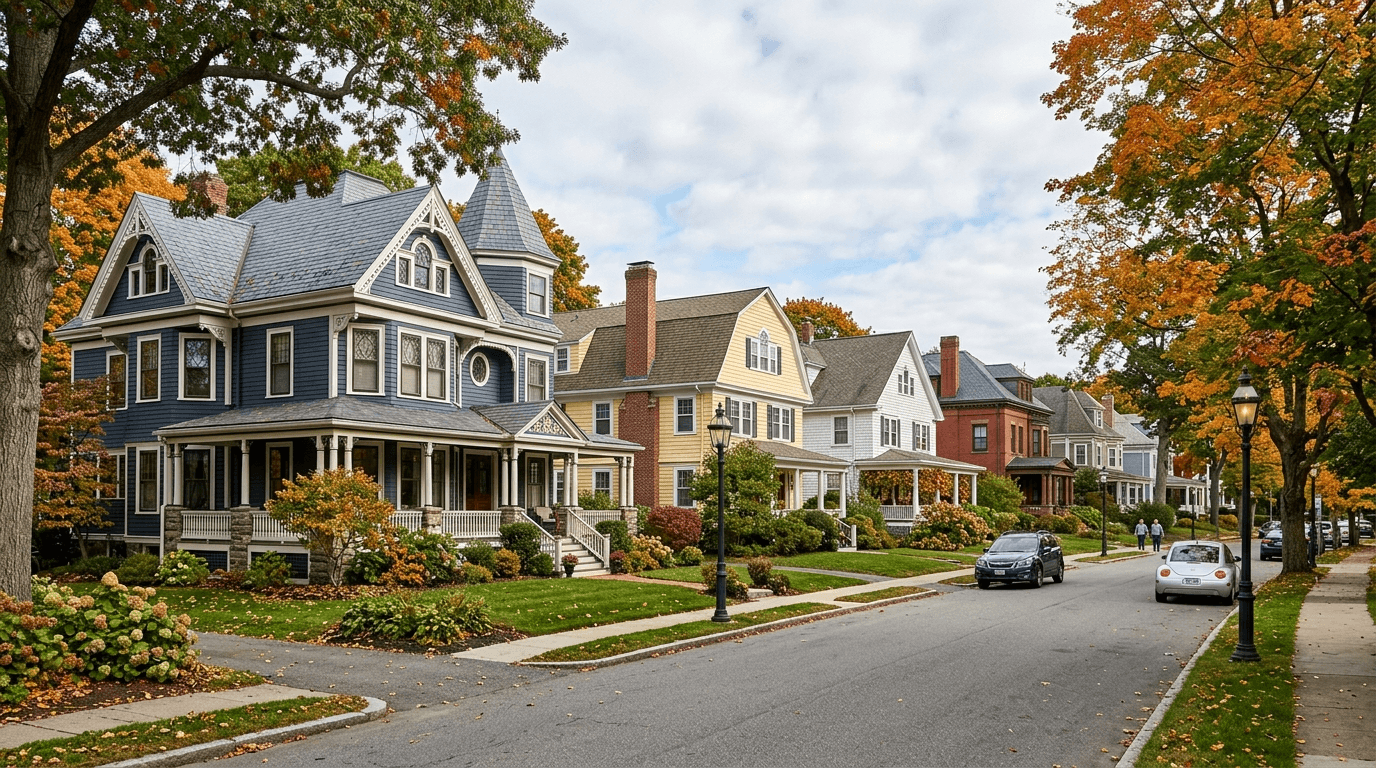
Upper Falls also has a distinct feel: historic character, smaller-scale streets, and a village setting.
The trade-off here is real, too. Newton has Local Historic Districts, and Upper Falls is often described as one of them. In such districts, exterior changes may require Historic District Commission review — confirm the current rules with your agent before planning any work. If you love preserved character, that's a benefit. If you want freedom to alter an exterior, it's a constraint. Upper Falls swaps one trade-off (transit) for another (renovation limits).
What do you pay for on the D-branch?
In villages like Newton Highlands, the draw is obvious: you can walk to the Green Line and ride into Boston without changing modes. That convenience gets priced into the home.
There's a timing wrinkle, too. The MBTA has been running temporary weeknight bus shuttles in place of some D-branch trains — confirm current service with the MBTA before you tour.
But be careful how you read that. Any temporary shuttle affects every D-branch rider equally, so it's not a point in Upper Falls' favor — it's a short-term wash, not a reason to discount a permanent locational difference. Test the commute you'll actually live with, not the one shown on a map.
Who should choose Upper Falls?
Upper Falls is a strong fit if you want more house, historic charm, and a quieter village feel. That's especially true if you work from home, drive to work, commute outside Boston, or only use the Green Line occasionally.
It's fair to push back that this framing is narrow. The transit trade-off really only bites for downtown rail commuters — a shrinking slice of buyers. So this comparison serves that group well and everyone else less. If rail isn't central to your week, the decision comes down to space, character, and renovation rules instead.
If downtown rail is your daily non-negotiable, choose the D-branch and accept the premium. But if your priority is space, character, and long-term comfort, Upper Falls deserves a serious look.
What should move-up buyers do next?
Before you choose, take three practical steps:
•Get a village-specific comparative market analysis (CMA). Newton prices vary sharply by village, condition, and lot — this shows the actual price gap for homes in your budget.
•Test-drive the commute from both Upper Falls and a D-branch village at your real travel times.
•Check historic-review rules with your agent before planning exterior changes.
One budgeting note: under recent buyer-representation rules, buyers typically sign an agreement spelling out fees before touring — confirm the current requirements with your agent and plan for that early.
The bottom line: Upper Falls can suit move-up buyers who value space and character over a one-seat train ride — as long as you accept the historic-review constraints and have honestly weighed resale.