
# Newton's FY2026 Property Tax Picture: Why Your Assessment Matters More Than the Lower Rate
•The reality: Per Newton Beacon reporting on the FY2026 classification hearing, Newton's FY2026 residential tax rate moved from $9.80 to $9.69 per $1,000, but most homeowners' bills will still rise because assessed values (the dollar figure the city assigns your home for tax purposes — not what it would sell for) climbed faster than the rate changed.
•The mechanism: Newton adopted a 174.68% residential factor — the legal formula Massachusetts cities use to charge businesses a higher tax rate than homes — per the FY2026 classification hearing reported by the Newton Beacon. That is essentially the maximum the state allows.
•The math: Per Newton Assessing Office testimony at the FY2026 classification hearing (Newton Beacon), residential property accounts for about 92% of Newton's assessed value but will pay 86.4% of the FY2026 tax levy. Commercial property holds roughly 7.77% of value but covers 13.6% of the bill. (The remainder is personal property and other classes.)
•The catch: A lower rate on a higher assessment can still produce a bigger check this June. Budget from your assessment, not the headline rate.
Why Does Your June Tax Bill Look Friendlier, But Still Feel Expensive?
Property tax season in Newton carries an uncomfortable paradox this year. The residential rate moved lower — that part is true. But for many homeowners, the actual bill landing in June will be larger than last year's.
Here's why.
Per Newton Beacon reporting on the FY2026 classification hearing, City Hall used the maximum legal version of a tool called the split tax rate — a Massachusetts rule that allows a city to charge commercial property at a higher per-$1,000 rate than residential property. Homeowners pay on their assessed value (the dollar figure the city assigns your home for tax purposes, not its market price — a distinction worth keeping in mind). Local businesses pay at a steeper rate.
The rate didn't move because Newton suddenly needed less revenue. It moved because more of the tax burden shifted toward commercial property owners — though residential owners still carry the overwhelming majority of the levy, as the numbers below make clear.
The rate did not move because Newton suddenly needed less money. It moved because more of the tax burden shifted toward commercial property owners — though, as we'll see, residential owners still pay the overwhelming majority of the levy.
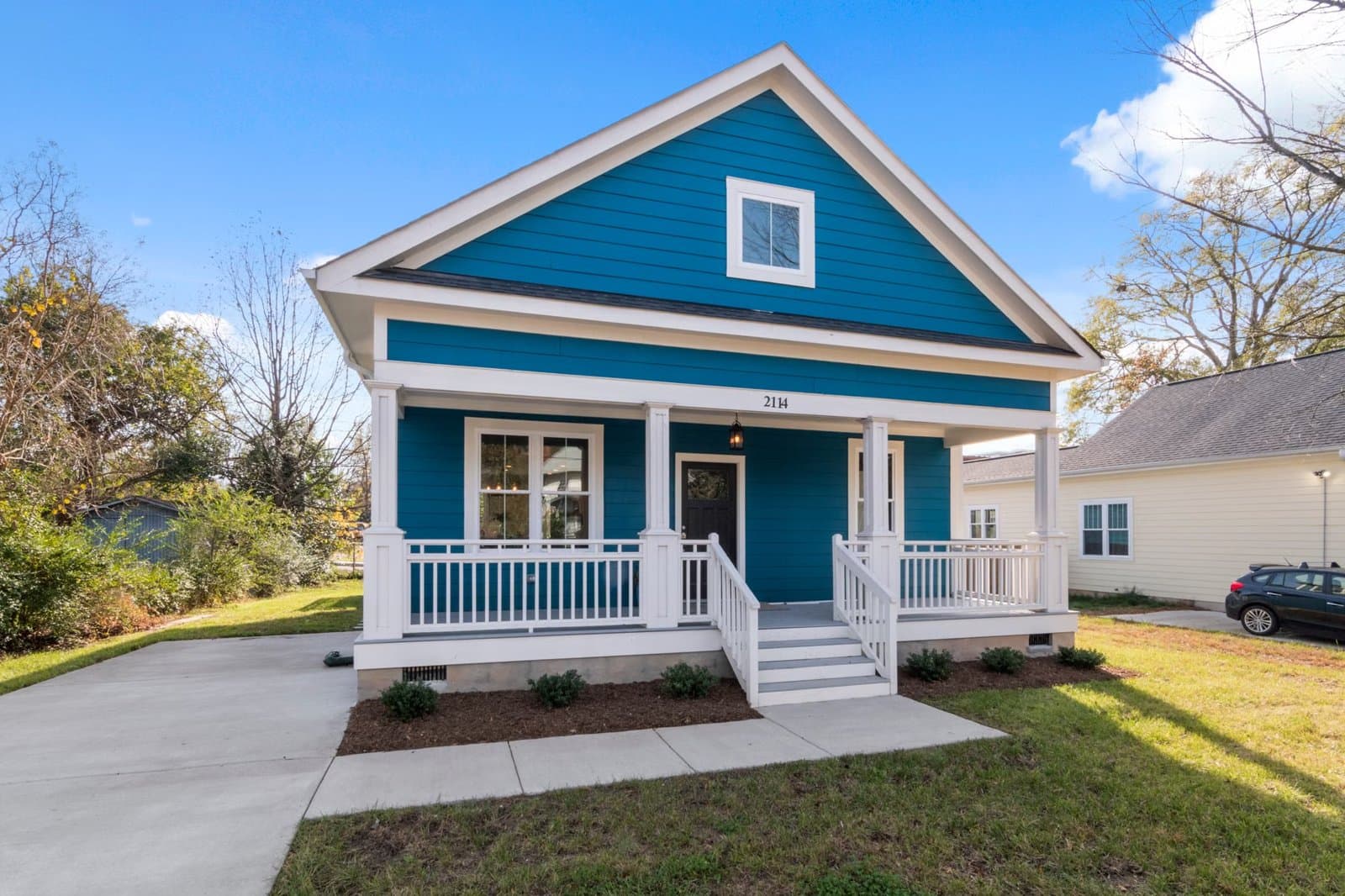
At the FY2026 residential rate of $9.69 per $1,000, a $1,400,000 single-family home owes roughly $13,566 a year before exemptions. (Math: $1,400,000 ÷ 1,000 × $9.69 = $13,566.)
That assessment-driven number is what to focus on — not the headline rate.
Was This Really a Tax Cut?
Not exactly.
The FY2026 residential rate change is better described as tax relief, not a true tax cut. The distinction matters: "relief" here means the bill rose less than it otherwise would have — not that bills went down.
Massachusetts allows cities to tax commercial property at a higher effective rate than residential property, up to a legal ceiling commonly described as a 175% residential factor. Newton landed at 174.68%, per Assessing Office testimony at the FY2026 classification hearing (Newton Beacon).
Per Newton Beacon reporting, Newton Director of Assessment Jim Shaughnessy told the Finance Committee that the city could not legally set the factor at exactly 175% without breaching state tax limits — the round number is a ceiling, not a target you can usually hit precisely. CFO Maureen Lemieux's recommendation of "175 percent" should be read as an aspirational maximum; 174.68% is essentially as close as the math allowed this year.
CFO Maureen Lemieux was direct with the Finance Committee:
"It's always been a conversation between 173, 174, and 175 percent, but I think this year, hands down… the 175 percent is absolutely what our recommendation would be."
That late-2025 decision is what homeowners are seeing in their FY2026 bills now.
Newton Official Property Tax Rates: FY2025 vs. FY2026
Official City of Newton residential and commercial tax rates per $1,000 of assessed value for FY2025 and FY2026.
FY2025 Tax Rate
FY2026 Tax Rate
| Series | Label | Value |
|---|---|---|
| FY2025 Tax Rate | Residential | $9.80 |
| FY2026 Tax Rate | Residential | $9.69 |
| FY2025 Tax Rate | Commercial | $18.34 |
| FY2026 Tax Rate | Commercial | $18.06 |
Both rates moved lower year-over-year:
•Residential: $9.80 to $9.69
•Commercial: $18.34 to $18.06
That's worth being honest about. The commercial rate also moved lower in dollar terms — the shift didn't raise it outright. What it did was keep the commercial rate higher relative to the residential rate than it otherwise would have been. Total assessed values across the city moved enough that the per-$1,000 rate could decline in both classes while the city still collected the levy it needed.
For homeowners, the gap between $9.69 and $18.06 is the split tax rate doing its job. Without the maximum shift, the residential rate would be higher than $9.69.
How Much Of The Tax Burden Did Businesses Pick Up?
This is where the numbers matter — and where it's important not to overstate the effect.
Per Newton Beacon reporting, Shaughnessy explained it this way to the Finance Committee:
"Although they make up 7.77 percent of the total property value, [commercial] would end up paying 13.6 percent of the property tax… residential property that makes up 92 percent of the value would end up paying 86.4 percent of the tax."
Newton FY2026 Property Tax Burden After Shift
Part-to-whole breakdown of Newton’s FY2026 property tax burden after the tax shift.
TOTAL
Residential Property Tax Burden After Shift
86.4%
Commercial Property Tax Burden After Shift
13.6%
| Series | Label | Value |
|---|---|---|
| FY2026 Tax Levy Burden | Residential Property Tax Burden After Shift | 86.4% |
| FY2026 Tax Levy Burden | Commercial Property Tax Burden After Shift | 13.6% |
The chart above shows the tax-burden split (86.4% residential / 13.6% commercial). The underlying value split (92% residential / 7.77% commercial, with the small remainder in personal property and other classes) comes from the Assessing Office testimony quoted above.
In plain terms: after the FY2026 shift, commercial properties carry 13.6% of Newton's property tax bill while representing just 7.77% of the city's assessed value — roughly double their proportional share. Residential property covers 86.4% of the bill on 92% of the value.
That gap — about 5.6 percentage points — is real, and it's the source of homeowner relief. But context matters: residential owners still pay the overwhelming majority of every dollar Newton collects. The split tax rate trims the residential share modestly. It doesn't transform Newton's tax base.
Source: Newton Beacon reporting of Assessing Office testimony, FY2026 classification hearing.
Why Could Your Actual Bill Still Be Higher?
This is the part that frustrates many Newton homeowners.
The rate moved lower, but your bill can still go up.
Your tax bill is the product of two things:
1. Your tax rate
2. Your assessed value
The FY2026 residential rate changed by about 1.1% year over year — you can verify this from the rates already cited ($9.80 → $9.69 is a difference of $0.11, or 1.1%).
Per Newton Beacon reporting on the FY2026 classification hearing, Newton's residential assessed values generally moved higher for the FY2026 cycle. If your home's assessment rose by more than 1.1%, your bill went up despite the lower rate.
That's the key distinction:
•Assessed value: what the city uses for tax purposes
•Market value: what a buyer might pay for your home
Your property tax bill follows the assessment — full stop.
The 174.68% shift did not lower most homeowners' bills in absolute dollars. It kept those bills from climbing even higher. That distinction matters for how you plan.
What Are The Strongest Arguments Against This Tax Shift?
A move this large deserves a fair look. The homeowner benefit is real, but modest, and there are genuine trade-offs.
Could Higher Commercial Taxes Push Businesses Away?
It's a legitimate long-term concern.
When commercial owners face higher costs, some raise rents. Others delay investment. Some may look outside Newton altogether. That matters because Newton's commercial base — though small as a share of total value — contributes disproportionately to the levy, covering 13.6% of the bill on just 7.77% of the value, per Newton Beacon reporting of Assessing Office testimony. If that base softens, the math reverses quickly onto homeowners.
Consider the scale. If commercial assessed values dropped sharply — say by 20% — and the city held spending flat, residential property would have to absorb a meaningful share of the gap. Even a few percentage points of commercial value erosion translates into noticeable upward pressure on the residential rate, because there are far more residential dollars to spread the loss across.
Commercial property is small, but it's leveraged: small percentage changes there move the residential rate more than homeowners might expect.
Is There Any More Relief Left To Pull Next Year?
Not much. That's the biggest warning for homeowners.
Per Newton Beacon reporting of the FY2026 classification hearing, Newton is already at 174.68% — essentially the maximum legal shift. There is no larger lever waiting for FY2027.
Future relief from this particular tool is nearly exhausted. If city spending rises and commercial values soften simultaneously, both safety valves close at once: the city can't shift more burden to commercial property because it's already at the cap, and the commercial base it's shifting onto is shrinking. In that compounding scenario, residential rates would have to move higher to make up the difference — even before any individual home's assessment changes.
FY2027 classification talks this fall may be considerably harder than the late-2025 vote.
Could Businesses Pass These Costs Back To Residents?
Some passthrough is unavoidable. A business facing higher property costs may raise prices; a landlord may pass costs to tenants through rent.
But the magnitude is bounded by arithmetic. Per Newton Beacon reporting of Assessing Office testimony, commercial property is only 7.77% of Newton's assessed value, and only a portion of commercial property tax flows through to Newton-resident consumers — much of it is paid by visitors, regional shoppers, and tenants whose own customers are spread across Greater Boston. Compare that to the direct, dollar-for-dollar residential rate reduction every Newton homeowner receives on their assessment.
For most homeowners, the direct rate benefit outweighs the indirect passthrough they personally absorb. For renters and small-business tenants in Newton, however, the math can look different — and that's a legitimate equity concern.
Not everyone on the Council agreed with going to the maximum. Ward 2 Councilor-at-Large Tarik Lucas said:
"I have always recommended 170 percent… because that is the most favorable tax rate for business owners."
What Should Newton Homeowners Do Now?
The headline rate is useful context. It's not the number you should plan around. Your assessment is.
•Check your FY2026 assessment. Notices typically mail in January. The abatement deadline is February 1. If recent comparable sales don't support your assessment, consider filing.
•Budget from the assessment, not the rate. At the FY2026 residential rate of $9.69 per $1,000, a home assessed at $1.4M produces roughly $13,566 in annual taxes before exemptions. Run the same calculation on your own assessment: (assessed value ÷ 1,000) × 9.69.
•Watch the commercial base. Areas like the Newton-Needham corridor, Riverside, and Northland are small as a share of total value but punch above their weight in the levy. Erosion there feeds back into residential rates faster than the 7.77% headline suggests.
•If you're buying this summer, underwrite carefully. Ask for the property's current assessment and use that for your tax estimate. The lower FY2026 rate is real, but it's only one input — and the shift tool that produced it is nearly tapped out for future years.
What Is The Bottom Line For Your FY2026 Newton Tax Bill?
Newton homeowners did get some relief in FY2026 — but it's narrower than the headline rate suggests.
That relief came from the city using the maximum legal split tax shift, moving slightly more of the burden onto commercial property owners. The result: the residential rate moved from $9.80 to $9.69 per $1,000, per Newton Beacon reporting of the FY2026 classification hearing.
Assessments generally moved higher, though, so many homeowners will still write a larger check than last year. And residential property still carries 86.4% of the total levy — the shift trimmed the residential share, it didn't transform it.
The clearest way to think about it:
The lower rate helped at the margin. Your assessment still drives your bill. And because Newton is already at the legal ceiling on the commercial shift, this kind of margin-of-relief will be harder to repeat next year — especially if the commercial base softens at the same time.
Pull your FY2026 assessment and compare it to recent nearby sales. If the numbers don't align, it may be worth exploring your options before the next abatement deadline.