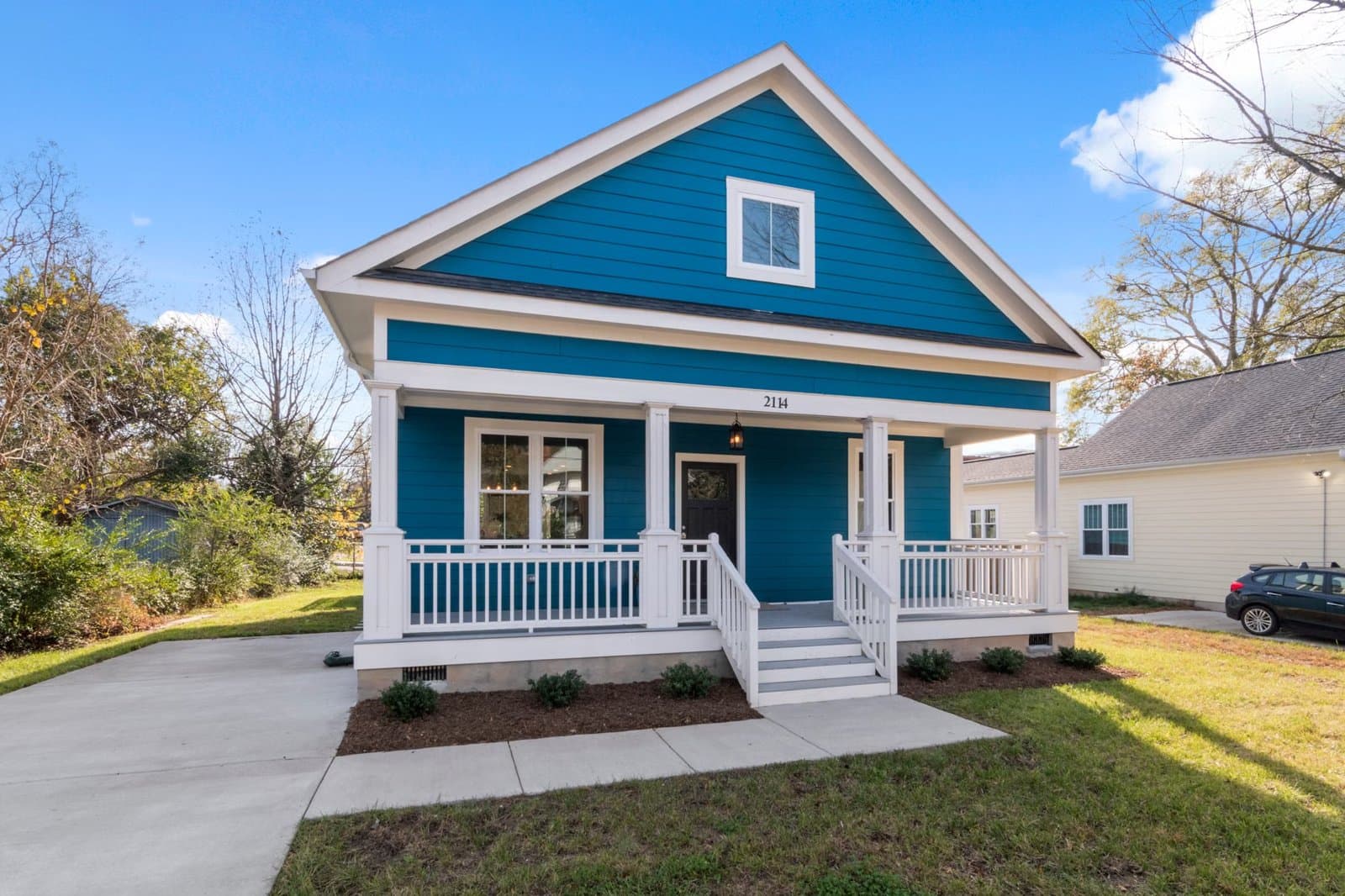
Homes for Sale in Needham MA: Pricing Zoning Upside
Written ByJung Yub Lee
PublishedJune 4, 2026
Read Time13 min read
I'm Jung Yub Lee, a Newton, MA real estate agent specializing in move-up and family homes across Greater Boston. I serve clients in English & Korean — from first search to closing. Serving Newton, Boston, Cambridge, Somerville, Medford and Needham, MA.
# Why Two Needham Homes at the Same Price Aren't the Same Asset: A Seller's Guide to Pricing Zoning Upside Into Your Listing
Key Takeaways
•The Myth: Two Needham MA homes listed at the same price are the same deal. They aren't — what the lot legally permits often matters more than the house itself.
•The Reality: With Needham homes selling in roughly 20 days and the typical sale price near $1.8M (per the local market snapshot below), the listings pulling premiums are the ones that document ADU eligibility, teardown rebuild rights, and expansion envelopes in writing.
•The Bottom Line: A pre-listing zoning workup — GIS pull, written Planning determination, one-hour attorney memo — gives Needham sellers a defensible reason to price higher, and the typical out-of-pocket cost (a few hundred dollars for municipal records plus an attorney hour) is small relative to a Needham-scale sale.
The home that closes well over asking isn't always prettier.
It may be the one whose seller proved the lot's zoning upside before the sign went in the ground.
If you're watching homes for sale in Needham MA this June, here's the short answer: at the same list price, the listing with documented zoning upside is usually the better deal — and the one more likely to attract multiple offers.
Two homes can look nearly identical online. Same street. Similar size. Same school zone. Similar list price.
But one gets multiple offers.
The other sits.
The difference isn't always the kitchen, the paint, or the staging. In many cases, it is what the land is legally allowed to become.
That's why zoning matters more than most buyers and sellers realize. In Needham real estate, the lot itself can carry hidden value. Sellers who document that value before listing often have a stronger pricing story. Sellers who don't may already be absorbing a quiet discount from sophisticated buyers who are pricing zoning risk directly into their offers.
Why Can Two Needham Homes At The Same List Price Be So Different?
Picture two homes going live this week at the same list price.
Both have four bedrooms. Both look similar at first glance.
But one sits on a 10,000-square-foot lot in a Single Residence B district. The other sits on a 43,560-square-foot lot in Single Residence A.
On paper, they're comparable. As assets, they're not — and as you'll see below, "different" doesn't automatically mean the bigger lot wins.
The median sale price in Needham over the last three months sits at $1.8M, with homes averaging 20 days on market — the same pace as last spring.
Needham Closed-Sale Pulse
A mixed-unit snapshot of Needham's recent closed-sale pricing, market speed, and April sales volume.
Closed sales
Median sale price (last 3 months)$1.8M
Median sale price change since same period last year4.8%
Median sale price per square foot$537
Median price per square foot change since last year0.9%
In a fast market, buyers don't have time to guess. They reward certainty. Show them what your lot can legally support, and you lower their risk. When risk drops, value tends to rise.
Because Needham's market moves in roughly three weeks, sellers should begin the zoning workup before formally committing to a list date — ideally while photography and staging are being scheduled — so the documentation is ready the moment the sign goes up.
Key Takeaway: In a market where homes move in about three weeks, one of the cheapest premiums a Needham seller can capture is the one they document before listing — and one of the easiest discounts to absorb is the one they leave undocumented.
What Should Needham Sellers Know About Zoning This Week?
Zoning upside isn't just a catchy listing phrase.
It means there may be additional legal value in your property based on what the lot can support. That value typically shows up in three ways:
•Accessory Dwelling Unit eligibility: The right to add a small second unit — an in-law suite, a rental cottage, or a backyard structure.
•Teardown rebuild rights: Written confirmation that a buyer could replace the existing home under current rules.
•Expansion envelope: The amount of additional living space a buyer may legally be able to build.
Massachusetts reset the baseline in February 2025. ADUs are now allowed by right in most single-family zones statewide. "By right" means the use is generally permitted if the property meets the applicable rules.
Statewide, the 2025 HLC survey logged 1,639 ADU applications against 1,224 approved units — meaning roughly one in four applications did not result in approval.
Massachusetts ADU Applications and Approvals
A statewide count comparison of ADU applications and approvals reported in the 2025 HLC Accessory Dwelling Unit survey.
A statewide count comparison of ADU applications and approvals reported in the 2025 HLC Accessory Dwelling Unit survey.
The state opened the door. Needham's local rules still determine how wide that door is for your specific lot. And because roughly one in four statewide ADU applications doesn't result in approval, "ADU eligibility" in the abstract isn't enough for marketing. Sellers should obtain a written Planning determination specific to their lot before using ADU language in listing copy.
That's the critical distinction: state law creates the opportunity, but a written local determination is what makes that opportunity bankable.
Why Are Needham Lots So Unequal?
Needham's zoning map is anything but uniform.
Minimum lot sizes range from 10,000 square feet up to 43,560 square feet — a full acre. The smaller minimums apply in Single Residence B and General Residence districts. The one-acre minimum applies in Rural Residence Conservation, Single Residence A, and Institutional districts.
Minimum Lot Area by Needham Residential and Institutional District
A single-metric comparison of minimum lot-area requirements across selected Needham zoning districts.
A single-metric comparison of minimum lot-area requirements across selected Needham zoning districts.
Two similarly priced homes can have dramatically different futures depending on where they fall on that map.
Lot coverage adds another layer. Coverage means the share of your land that buildings are permitted to occupy — and Needham's rules favor smaller lots on a percentage basis. Allowed coverage steps up as lots shrink: 30% for lots of at least 9,000 square feet, with intermediate tiers rising to 35% for lots under 7,000 square feet.
Maximum Lot Coverage by Lot Size in Needham
A percentage-only chart showing how Needham’s maximum lot coverage limit changes by parcel-size band.
A percentage-only chart showing how Needham’s maximum lot coverage limit changes by parcel-size band.
Series
Label
Value
Maximum lot coverage
Lots containing less than 7,000 square feet
35%
Maximum lot coverage
Lots containing at least 7,000 square feet but less than 7,500 square feet
34%
Maximum lot coverage
Lots containing at least 7,500 square feet but less than 8,000 square feet
33%
Maximum lot coverage
Lots containing at least 8,000 square feet but less than 8,500 square feet
32%
Maximum lot coverage
Lots containing at least 8,500 square feet but less than 9,000 square feet
A bigger lot is not automatically the better asset. A smaller lot may be permitted to cover a higher share of its land, which can support a meaningful addition. A larger lot may carry subdivision potential but face stricter coverage limits. Both can have genuine upside — just different shapes of it — and both need to be documented before they can be priced.
Here's the plain-English version: one homeowner may be able to add a primary suite without needing a variance — special permission to deviate from the standard zoning rule. A neighbor two streets over may not have that same option.
Spring 2026 is the first full selling season where sophisticated buyers are actively pricing this in. Many sellers still aren't. That gap means undocumented sellers aren't just missing a premium — they're increasingly accepting a quiet discount.
Which Zoning Factors Move Needham Prices The Most?
Our editorial framework identifies four main levers that tend to drive pricing upside in Needham. The table below is an author synthesis drawing on the Town of Needham zoning bylaw and the Massachusetts ADU statute; the ADU row reflects the 2025 state law, while the teardown, expansion, and subdivision rows reflect local bylaw provisions.
Needham Zoning Levers That Move Prices
Compares four zoning-related value levers for Needham home sellers and why buyers may pay for each in the June 2026 selling market.
Category
What It Means
Why Buyers Pay For It
ADU eligibility
Lot can legally support a small second unit (up to 900 sq ft under state rules)
Rental income optionality, in-law flexibility
Teardown rebuild rights
Written path to a replacement home within current setbacks
Separates a "land deal" from a "house deal"
Expansion envelope
Lot coverage and setbacks allow planned addition
Buyer avoids permit risk on the renovation they already want
Subdivision potential
Larger lots in lower-density districts may support a second parcel
Each lever should be measured. Then documented in writing.
Don't save this for a casual comment at the open house. If zoning upside is real, it belongs in the MLS packet — where buyers can review it, share it with their attorney, and factor it into their offer.
Documentation doesn't shorten the permitting timeline a buyer would still face. What it does is eliminate the informational uncertainty: the buyer sees exactly what the path looks like before writing the offer, rather than pricing in worst-case assumptions.
That's how "potential" becomes something buyers can actually act on.
What Should A Pre-Listing Zoning Workup Include?
The zoning work should happen before photos — and ideally before you formally commit to a list date. Not after the first weekend of showings.
Here is the seller checklist we'd use in Needham. Steps can run in parallel to compress the timeline:
•Step 1 — Early days: Pull the lot's zoning district and overlays from Needham's GIS. Request permit history from the Building Department. Permits issued on or after March 18, 2020 are available online, per the Town of Needham. Get written confirmation of legal and conforming status.
•Step 2 — Next: Request a written zoning determination from Planning. Focus on ADU eligibility, rebuild rights, and setback limits.
•Step 3 — In parallel: Hire a local zoning attorney for a one-hour opinion on any nonconforming conditions. Also review title for easements, conservation restrictions, and leased solar contracts.
•Step 4 — Recommended: Ask a civil engineer for a concept review if a teardown, subdivision, or ADU might be realistic. Wetlands buffers and grade can erase upside that looks viable on a map. Do not use "teardown potential," "ADU eligibility," or "expansion envelope" language in marketing until this step is complete. Marketing unverified potential is precisely the hype this article cautions against.
•Step 5 — Before launch: Build a "Zoning & Development" MLS supplement. Include the zoning determination, permit history, title summary, attorney memo, and an overlay map showing the usable building area.
The goal isn't to move slowly.
The goal is to move prepared — and to start before you've fully committed to a list date.
For sellers, this creates a stronger list-price argument. For buyers, it reduces uncertainty. That combination carries real weight in a fast Needham market.
How Can Sellers Price Zoning Upside Without Overreaching?
The discipline is straightforward.
Measure the upside. Then subtract the buyer's cost, time, and approval risk.
Per Town of Needham permitting guidance, special permits generally take several months to work through hearings and decisions, and variances can take longer. That timeline matters because buyers discount uncertainty. Documentation doesn't shorten the permit clock — but it replaces the buyer's worst-case assumptions with a clear, written path, which is what reduces the discount they apply to your price.
The Town's own buildout analysis illustrates the gap between what is built today and what is legally permitted. The analysis groups parcels into study blocks for review. In the first such block — 64 parcels covering 26.3 acres — the maximum additional floor area came to 129,502 square feet on top of existing structures, or roughly 2,000 square feet per parcel on average.
Needham Buildout Analysis: Parcel Blocks and Additional Floor Area
A table-format summary of selected Town buildout-analysis blocks, including parcel counts, acreage, existing gross floor area, and maximum additional floor area.
That per-parcel average is the honest number. Individual lots will vary widely — some have far more headroom, some have none. The point is that a measurable gap often exists between what is built today and what is legally allowed, and sellers who quantify that gap on their lot can defend their price with facts rather than impressions.
Useful listing language — only after Step 4 is complete — might include:
•"Potential ADU eligibility — written Planning determination on file."
•"Build/teardown potential — conceptual site review and wetlands check on file."
•"Permit history and Town confirmation of legal status included with MLS packet."
The operative phrase is only after verification.
Unverified "potential" reads like hype. Verified zoning support reads like value.
What Are The Strongest Arguments Against Marketing Zoning Upside?
There are fair objections. Here's how they hold up.
Could Marketing Zoning Upside Invite Too Much Scrutiny?
Some sellers worry that raising zoning will create problems. But in a strong market, silence tends to leave money on the table. Buyers are already trying to understand the lot's future use. If you don't frame the facts, they'll price in the risk themselves — and that usually means a lower number.
Pre-sale marketing is different from filing for permits. Abutter pushback typically surfaces when an owner applies for a specific project, not when a listing accurately describes verified rights. The stronger move is to be clear, factual, and documented.
Is A Buildable-Envelope Sketch Worth The Cost?
For some homes, yes.
An architect's buildable-envelope sketch typically costs a few thousand dollars — modest relative to a Needham-scale sale. The sketch doesn't guarantee a higher price. What it does is give a buyer a concrete picture of what is legally possible on the lot, which can support a stronger pricing position and reduce the discount a cautious buyer would otherwise apply.
For lots where the upside is primarily turnkey condition rather than future expansion, the sketch probably isn't necessary.
Do Family Buyers Really Care About Zoning?
Yes — often more than they realize.
A family buyer may not think of themselves as a development buyer. But they frequently care about:
•Space for aging parents
•A future in-law suite
•A rental ADU
•A larger kitchen or family room
•A primary suite addition
•Long-term resale value
Those are lifestyle questions. They're also zoning questions. For any buyer planning to own the home for more than five years, the future flexibility of the lot matters.
When Does Zoning Upside Not Apply?
Not every property has hidden zoning value — and pretending otherwise damages credibility.
Zoning upside may be limited or unavailable on:
•Wetlands or conservation-restricted lots where the usable building area is already maxed out.
•One-acre district lots where ADU dimensional requirements still can't be met. (This is one reason a bigger lot isn't automatically the more valuable asset.)
•Nonconforming structures where rebuild rights are constrained by current setbacks.
•Title-encumbered lots with shared driveways, recorded easements, or leased solar contracts.
When zoning upside is limited, the marketing strategy should shift rather than stretch.
Sometimes the strongest story isn't "future expansion." Sometimes it's "clean, turnkey, and low-risk." That can be just as compelling — when it's honest.
What Is The Playbook For Needham Sellers This Season?
If you're selling in Needham this June, don't assume your home's value begins and ends with bedrooms, baths, and finishes.
Two homes at the same list price are not the same asset.
The difference may be the lot — and at this point in the cycle, the risk isn't just missing a premium. It's absorbing a silent discount from buyers who are already pricing zoning uncertainty in.
Start with the basics this week:
•Pull the GIS zoning record.
•Review the permit history.
•Request written Planning input — specific to your lot, not just general eligibility.
•Have a zoning attorney review anything unusual.
•Get a civil engineer's concept review before using "potential" language in marketing.
•Package the findings before professional photos.
For the buyer, this reduces months of uncertainty. For you, it creates a clear, defensible reason to price with confidence — and protects you from the quiet discount a well-informed buyer would otherwise apply.
In Needham, the cheapest premium you may ever capture is the one you document before you list. Everything else can become the buyer's discount.
If you want to know whether your Needham property has ADU, rebuild, or expansion value, ask for a pre-listing zoning review before you set the price.
Common Questions
What makes two Needham MA homes at the same price different assets?
Zoning rights can make two Needham MA homes very different, even with the same price, size, and street. One lot may allow an ADU, teardown rebuild, or larger addition, while another may not. The article says buyers pay more when that legal upside is documented before listing.
How can Needham sellers prove zoning upside before listing?
Needham sellers can prove zoning upside by pulling the town GIS record, checking permit history, requesting a written Planning determination, and getting a short zoning attorney memo. The article recommends assembling these items into a zoning and development packet before professional photos or open houses.
Can ADU eligibility increase interest in homes for sale in Needham MA?
ADU eligibility can increase buyer interest in homes for sale in Needham MA because it may allow a small second unit for family or rental use. The article notes Massachusetts changed the baseline in 2025, but Needham’s local lot rules still decide whether a specific property qualifies.
Does documenting rebuild or expansion rights help a Needham seller price higher?
Documenting rebuild rights can help a Needham seller support a higher list price because buyers discount uncertain future work. The article says a written zoning workup turns vague “potential” into something buyers can evaluate, especially in a fast Needham real estate market averaging about 20 days on market.
Is zoning upside always valuable for Needham real estate listings?
Zoning upside is not always valuable for Needham real estate listings. The article warns that wetlands, conservation restrictions, nonconforming structures, title issues, shared driveways, easements, or leased solar can limit what a buyer can build. In those cases, honest disclosure may perform better than vague expansion claims.