
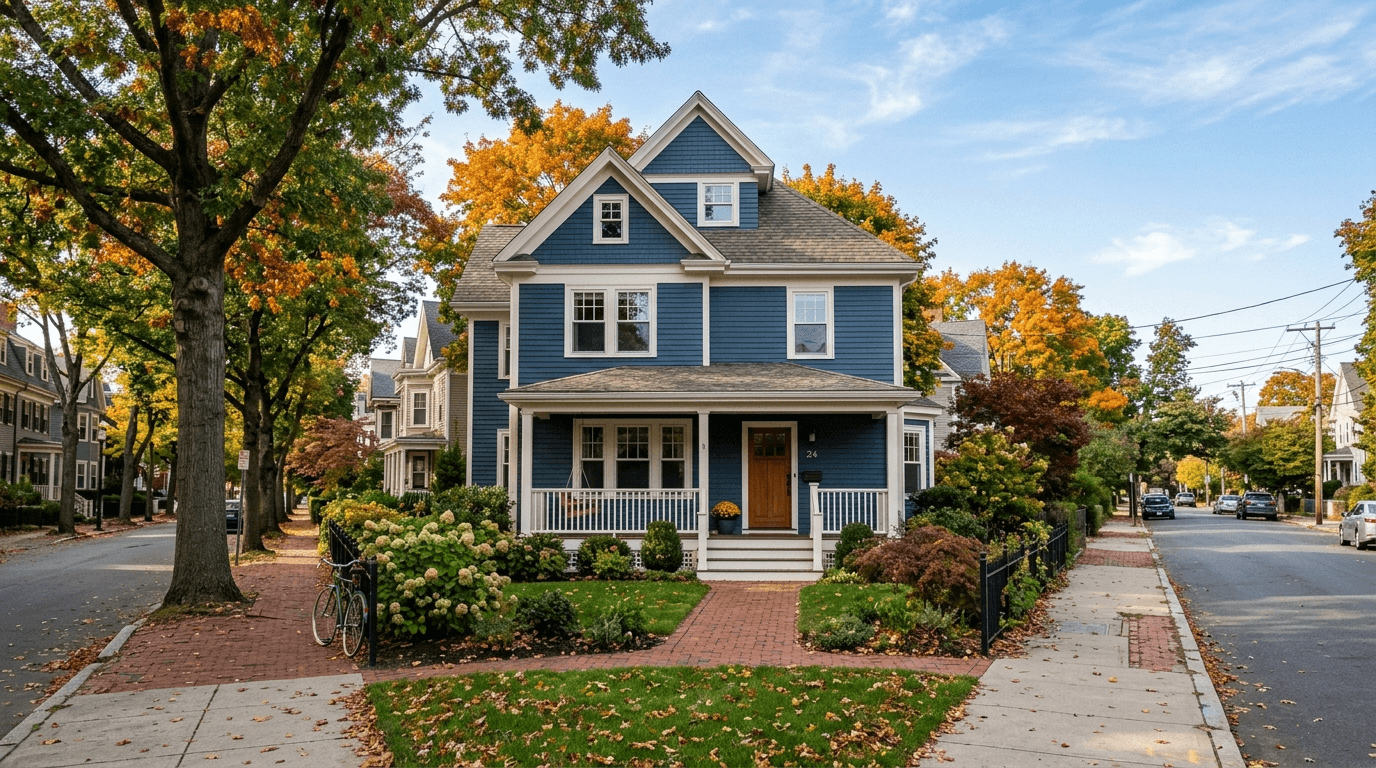
Single-Family Sellers Still Hold the Upper Hand in Cambridge. What Does It Mean if You're Selling to Buy?
Quick Summary
•The move-up trap: More single-family listings sound like breathing room. For families trading up, it isn't — you may sell your condo quickly, then compete just as hard for the bigger house.
•The "balanced" label is an average: A citywide supply reading blends slower-moving condos with competitive single-family homes. Treat the headline as a distraction from the narrower move-up story.
•The real opening: Any extra room to negotiate shows up in homes with friction — fixer-uppers — not turnkey homes, which still sell above ask.
•The bottom line: Sequence the buy before you fully commit the sell.
Does Cambridge's inventory picture really help move-up buyers?
It helps — but only at the margins, and not evenly.
If you're selling a condo to buy a single-family home, more listings sound encouraging: more choices, less pressure. This August, that's only partly true. The citywide picture blends two different markets. Condos are plentiful and price-sensitive; single-family homes remain scarce and competitive.
So the real question isn't "Is Cambridge balanced?" It's this: can you sell your current home, buy the right larger one, and avoid getting stuck between closings? That's a sequencing problem, not just a pricing one.
Why does the "balanced market" label mislead sellers who need to buy?
Because the citywide average hides the split between segments.
You might point out that a strong sale-to-list ratio and a "Balanced" supply reading are genuinely healthy signs — and they are. But for a move-up buyer, the average you sell into isn't the average you buy into.
The price gap makes that clear.
Year-to-Date MLS Performance by Property Type
MLS PIN year-to-date closed-sales metrics by property type as of March 30, 2026.
Price Change YoY
Sale Price as % of List
| Series | Label | Value |
|---|---|---|
| Price Change YoY | Single Family | +17.7% |
| Sale Price as % of List | Single Family | 102.04% |
| Price Change YoY | Condo | +6.1% |
| Sale Price as % of List | Condo | 98.83% |
| Price Change YoY | Multi-Family | -21.1% |
| Sale Price as % of List | Multi-Family | 96.86% |
Cambridge single-family homes sold at 102.04% of list price and rose +17.7% year over year, while condos sold at 98.83% of list price and rose +6.1%. Multi-family, a smaller segment, actually fell year over year. Even amid more inventory, single-family sellers still hold the upper hand.
It might seem like selling your condo above asking evens things out — that added leverage on price and terms offsetting the buyer competition ahead. It doesn't, not fully. A condo gain rarely covers the far larger jump to a house, and the real risk here is sequencing, not price alone.
Where is the real opening for Cambridge move-up buyers?
Not the perfect turnkey house — the one with friction: dated kitchens, older systems, awkward layouts, or work most buyers avoid. Fewer buyers can stomach the project, so you gain more room to negotiate.
Be honest about the risk, though: a home that sits a long time may just be undesirable or overpriced, not a hidden bargain. And with single-family sales thin, any slice by price band or neighborhood is a small sample — treat specific recommendations as directional. This is modest softening at the edges, not a shift of power to buyers.
What should you do before listing your current home?
Treat the sale and purchase as one linked event, not two separate transactions.
•Line up the buy before you fully commit the sell. The biggest risk is being forced to move without the next home secured.
•Target homes where negotiation is realistic — fixer-uppers and homes with longer days on market.
•Price your current home close to the local median to create the fast, strong sale you need.
•Plan around inspections. Massachusetts recently changed the rules on inspection waivers — confirm current requirements with your agent before drafting offer terms.
Estimates of how fast homes sell range widely — from about 44 to 76 days depending on the source. Since your sequencing plan hinges on this number, treat any single "still fast" claim with caution and build in extra cushion.
So, should you sell first or buy first?
For many Cambridge move-up buyers, the safer answer is: prepare the sale first, but don't fully commit until the buy side is clear. Your condo may sell well, but the house you want may still be hard to win.
More inventory gives you more options, especially if you're open to some work — it doesn't remove the need for a careful plan.
Want to move this fall? Start with the numbers for your exact condo, target budget, and neighborhood. From there, we can tell you whether to buy first, sell first, or build a bridge strategy.